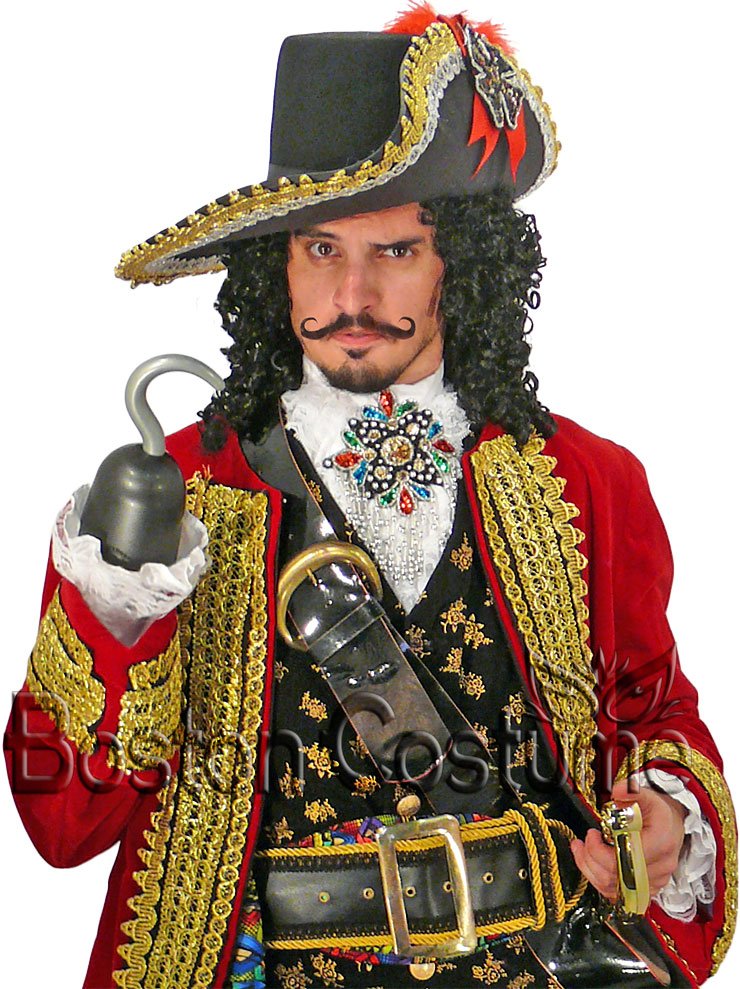
It's an image seared into our collective imagination: the grizzled pirate, eye patch, parrot on shoulder, and, most distinctively, a gleaming hook replacing a missing hand. This iconic emblem, more than just a fictional appendage, carries a surprising weight of historical and cultural significance, shaping our understanding of piracy, disability, and the power of myth. But how much of this swashbuckling imagery is rooted in reality, and what profound truths does it reveal about the stories we tell ourselves?
Before we hoist the mainsail on this journey, here’s a quick overview of what we’ll explore:
At a Glance: Unraveling the Pirate Hook
- Myth vs. Reality: While ubiquitous in fiction, the practical use of hooks by historical pirates was exceedingly rare, if it happened at all.
- Symbolic Power: The hook serves as a potent symbol of menace, resilience, and a life lived on the fringes of society.
- Cultural Icon: From Captain Hook to modern media, it's an instant visual shorthand for "pirate," deeply embedded in popular culture.
- A Storyteller's Device: Its primary function isn't practical, but narrative, allowing tales like Captain Barnacle Bill's "Odd Hook" to weave deeper meanings.
- Beyond Gold: It embodies the idea that true treasure can be found in unexpected places, sometimes even in the very tools of a pirate's trade.
The Hook: More Than Just a Nautical Nuisance
The sheer magnetic pull of the pirate hook is undeniable. It transforms a formidable seafarer into an almost mythical figure, a man—or woman—who has stared down danger and come back... changed. But let's be frank: as a tool, a hook on a stump presents more challenges than advantages. Imagine climbing rigging, wielding a cutlass, or even handling a delicate map with such an unwieldy device. The practicalities simply don't align with the demanding, often brutal, realities of life at sea.
Yet, its impracticality is precisely what makes it so powerful culturally. It’s not about function; it's about form, about what it represents. It signals a story, a past struggle, a defiance of natural limitations. This symbolic weight far outweighs any conceivable real-world utility, making the pirate hook a masterpiece of cultural imagery rather than a triumph of historical engineering.
A Symbol Forged in Imagination
From childhood tales to blockbuster films, the hook is a visual anchor for the pirate identity. It's instantly recognizable, a shorthand that transcends language and era. But why this particular symbol? Its potency lies in its ability to simultaneously evoke fear and fascination.
Consider the psychological impact: a sharp, metallic appendage replacing a human hand immediately conjures images of violence, loss, and the cold efficiency of a weapon. It hints at a brutal encounter, perhaps a clash with a rival crew, a marine creature, or even a cannonball. This backstory, implied rather than stated, adds layers of grit and gravitas to the pirate persona. It speaks to a life of peril and survival against the odds.
Moreover, the hook embodies a certain defiant spirit. To lose a hand in an era without advanced prosthetics would be a devastating blow, often leading to ostracization or an end to an active life. The pirate with a hook, however, reclaims agency. He (or she) turns a disability into an identifier, a badge of their dangerous profession. It’s a testament to resilience, however grim, suggesting that even amidst profound loss, the pirate finds a way to remain formidable. This transformation from victim to victor, albeit a morally ambiguous one, is a cornerstone of its appeal.
The Pirate Hook in Popular Culture: From Villain to Icon
It's impossible to discuss the pirate hook without paying homage to its most famous purveyor: Captain Hook from J.M. Barrie's "Peter Pan." Barrie’s creation, a character perpetually tormented by a ticking crocodile and a mischievous boy, cemented the hook in the popular imagination. Here, the hook isn't just a physical attribute; it's a direct consequence of a past battle, a source of both menace and pathetic vulnerability. It’s a brilliant narrative device that gives the villain a tangible, unforgettable characteristic, ensuring the image endures.
Beyond Neverland, the hook finds its way into countless portrayals. It appears in children's books, comics, video games, and theme park attractions, always signaling "pirate" without needing further explanation. It's a testament to the power of a well-crafted symbol, one that has resonated so deeply that it has transcended its fictional origins to become an almost archetypal representation of a specific kind of rogue. If you're looking to delve deeper into the origins and evolution of this fascinating symbol, you'll find a comprehensive resource in Your guide to pirate hooks.
Beyond the Stereotype: Historical Realities (or Lack Thereof)
Here's where we anchor ourselves in the often-unromantic truth: historical evidence for pirates actually using hooks as prosthetics is virtually nonexistent. While injuries were commonplace in the brutal world of 17th and 18th-century seafaring – cannon fire, cutlass wounds, disease, and falls from rigging – the solutions were far less glamorous than a shiny metal hook.
A lost limb meant one of two things: death from infection or a life significantly impaired. Amputations were crude, painful, and often fatal. Survivors might use a simple wooden peg, a padded stump, or, most commonly, nothing at all. The idea of a finely crafted, functional metal hook as a replacement for a hand simply doesn't align with the medical technology or even the practical needs of the era. Such an item would be heavy, cumbersome, prone to rust, and incredibly difficult to secure and use effectively in the dynamic environment of a ship.
So, if real pirates didn't use them, where did the hook come from? It's largely a product of romanticized fiction, a theatrical flourish designed to enhance the mystique and menace of the pirate character. It’s a trope that emerged and solidified in the Victorian era's explosion of adventure literature, long after the golden age of piracy had passed.
The Odd Hook of Captain Barnacle Bill: A Deep Dive into Myth and Meaning
While practical hooks might be a fantasy, the idea of a significant, unique hook holds immense cultural weight, perfectly exemplified by the legend of Captain Barnacle Bill and his "Odd Hook." This isn't a story of historical accuracy, but of the deep, mystical layers we imbue objects with, especially when they belong to figures larger than life.
Captain "Barnacle" Bill, a name that evokes both a hardened seaman and a touch of the fantastical, wasn’t just any pirate. He navigated his brigantine, The Sea Serpent, with an air of destiny, and central to this was his ancient, tarnished brass hook. This wasn't a crude replacement for a lost limb; it was a relic, "fished from a sunken Spanish galleon in the Bermuda Triangle." Immediately, the object is elevated beyond mere functionality. It’s imbued with history, mystery, and the supernatural.
The hook’s unique features — a peculiar spiral tip, an eerie magnetic pull, and a faint hum — set it apart. His first mate, Peg-Leg Pete, a character himself defined by a common prosthetic, viewed it with understandable suspicion. Yet, Bill, perhaps more attuned to the whispers of the sea, sensed its magic. This distinction is crucial: Pete sees a strange object, Bill perceives a conduit to something greater.
The legend reaches its climax during a ferocious storm. Bill, driven by instinct and perhaps the hook's own peculiar vibrations, hurled it into the tempest. The immediate, unnatural calm that followed—winds dying, waves flattening, rain ceasing—is the ultimate proof of its power. This isn't a practical tool; it's an artifact of immense, benevolent magic, capable of bending nature to its will.
Days later, guided by this mystical artifact, The Sea Serpent found a hidden cove. This wasn't just another anchorage; it was a paradise: crystal clear waters, trees bearing glowing fruit, an intoxicating scent, and strange, gentle creatures. It was a place "beyond the known world." Bill's realization that the hook was a "key" to wonders signifies a profound shift in perspective. His greatest treasure wasn't the gold typically sought by pirates, but the quiet magic of this untouched haven. He abandoned his life of plunder, choosing to live out his days "in peaceful wonder."
The tale of Captain Barnacle Bill and the Odd Hook brilliantly illustrates the cultural significance of the pirate hook: it symbolizes transformation, discovery, and the pursuit of something far more profound than material wealth. It tells us that even the most fearsome figures can find solace, and that "treasure" comes in many forms. This legend isn't about how pirates actually used hooks; it's about how we, as a culture, imagine and interpret them, embedding them with desires for magic, escape, and ultimately, peace.
What the Pirate Hook Teaches Us About Storytelling
The enduring myth of the pirate hook, especially when viewed through tales like Barnacle Bill's, offers a powerful lesson in storytelling. It demonstrates how powerful symbols can transcend literal truth and practical application to become vessels for deeper human desires and fears.
- Symbols Trump Reality: The hook’s longevity in popular culture proves that a compelling symbol, even if historically inaccurate, can resonate more deeply than factual accounts. It’s a visual shortcut to a complex idea: the dangerous, adventurous, and slightly monstrous pirate.
- The Human Need for Archetypes: Pirates, with their hooks, parrots, and eye patches, are archetypal figures. They represent freedom, rebellion, danger, and the allure of the unknown. The hook, in particular, adds a touch of the extraordinary, making them larger than life.
- Blending Fear, Fantasy, and Adventure: The pirate hook masterfully combines elements that captivate us. There's the fear of the unknown, the fantasy of a magical object, and the adventure of exploration. This potent cocktail ensures its continued presence in our narratives.
- The Evolution of Meaning: While initially (in popular fiction) a mark of injury and menace, the hook can, as in Captain Barnacle Bill's story, evolve to represent guidance, discovery, and even redemption. It becomes a versatile narrative tool, adapting its meaning to the story being told.
Dispelling Common Misconceptions About Pirate Hooks
Let's cut through the fog of myth with some clear observations:
- Myth 1: All pirates had hooks.
- Reality: This is perhaps the biggest misconception. As discussed, there is virtually no historical evidence to support widespread use of hooks (or any sophisticated prosthetics) by real pirates. The conditions, medical knowledge, and available materials of the era made such devices impractical and rare.
- Myth 2: Hooks were practical weapons or tools.
- Reality: While a sharp hook could theoretically be used in a desperate moment, it would be incredibly cumbersome compared to a cutlass, pistol, or even a bare fist. For everyday tasks on a ship – knot tying, steering, firing cannons, scaling masts – a hook would be a significant hindrance, not an aid.
- Myth 3: Hooks were a sign of bravery or status.
- Reality: Losing a limb was a severe injury, often leading to death. Survival meant a significant impairment, and while pirates were certainly tough, a lost hand would be seen as a misfortune, not a badge of honor to be accessorized. True "status" on a pirate ship came from leadership, skill, and successful plunder, not from a disfigurement.
- Myth 4: Hooks were common among disabled sailors.
- Reality: Sailors, like anyone else in that period, would have used basic, often uncomfortable, prosthetics like wooden pegs or simply managed with their injury. The sophisticated, menacing metal hook is largely a creation of dramatists and illustrators, not a reflection of period medical or engineering solutions.
Beyond the High Seas: The Hook's Enduring Legacy
Even if historically inaccurate, the pirate hook has carved out a permanent niche in our cultural landscape. Its influence extends far beyond mere pirate stories:
- Halloween Costumes: Every year, countless children and adults don the classic pirate costume, hook included, reinforcing its status as an iconic symbol.
- Sports Mascots and Branding: From sports teams to seafood restaurants, the pirate hook instantly evokes themes of adventure, daring, and a touch of rebellious spirit, making it a popular choice for branding.
- Language and Idiom: While not as common as "walk the plank," the imagery associated with the hook contributes to our broader understanding and lexicon of pirate lore.
- A Symbol of the Unconventional: The hook signals someone who is different, who operates outside the norm. This resonates with our fascination for anti-heroes and those who defy societal expectations.
The enduring legacy of the pirate hook isn't about its physical presence on actual pirate ships, but about its profound psychological and symbolic presence in our collective mind. It's a testament to the power of stories and how fictional elements can become more real and influential than historical facts. It invites us to consider what other "truths" we hold dear might actually be woven from the threads of our deepest desires and fears.
Charting Your Own Course Through Pirate Lore
The journey through the historical and cultural significance of the pirate hook reveals a fascinating truth: sometimes, the most enduring symbols are born not from factual accuracy, but from the fertile ground of human imagination. The pirate hook, an improbable prosthetic, has become an indelible icon, telling us more about the power of myth-making than about 18th-century medical practices.
As you explore further into the captivating world of buccaneers and privateers, remember that true understanding often requires looking beyond the superficial. Challenge the stereotypes, question the imagery, and seek out the deeper meanings embedded in the legends. Just like Captain Barnacle Bill's Odd Hook guided him to a treasure far richer than gold, a critical eye and an open mind can lead you to profound insights hidden within the folds of history and storytelling. Your greatest discovery might just be the realization that the most powerful treasures lie not in what’s real, but in what we choose to believe.